EXOTIC CAR STORY
Inside the machine.
The Story Behind the Lamborghini 350 GT
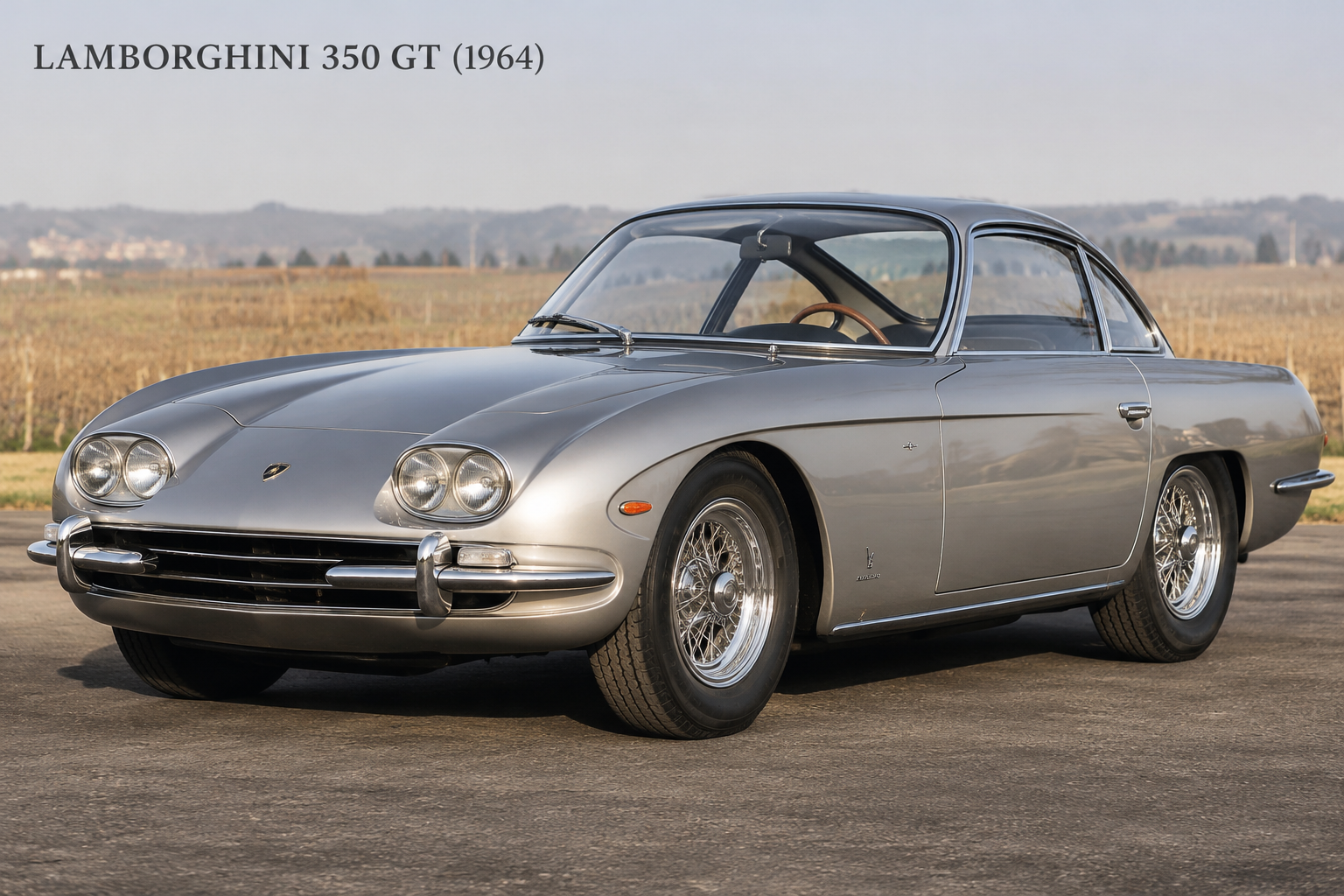
Before Lamborghini became synonymous with cars like the Miura, Countach, Diablo, Murciélago and Aventador, there was the 350 GT.
The story begins with Ferruccio Lamborghini. Ferruccio was already a successful businessman, especially in manufacturing tractors and other industrial equipment. He was also an automobile enthusiast who owned expensive sports and grand touring cars.
According to the famous Lamborghini origin story, Ferruccio was dissatisfied with aspects of the Ferraris he owned, particularly their clutches. After voicing his concerns to Enzo Ferrari and receiving a dismissive response, Ferruccio decided he could build a better grand touring automobile himself.
Whether every detail of that legendary exchange happened exactly as later retellings describe it is debated, but Ferruccio's objective was clear: build a fast, sophisticated, and comfortable Italian GT capable of competing with Ferrari.
In 1963, Lamborghini unveiled the experimental 350 GTV, which served as the prototype and statement of intent. The design was later reworked for production, becoming the 350 GT, introduced publicly in 1964.
The production car featured beautiful aluminum coachwork produced by Carrozzeria Touring and a front-mounted 3.5-liter V12 derived from an engine designed by renowned engineer Giotto Bizzarrini. Lamborghini deliberately softened the highly tuned, racing-oriented engine concept for refined road use.
The result was approximately 280 horsepower, exceptional performance for the period, and a top speed around 250 km/h (155 mph) depending on specification and source.
But the 350 GT mattered for something greater than its numbers.
It proved that Lamborghini was a serious automobile manufacturer.
The company had gone from building tractors to producing a sophisticated V12 grand tourer that could stand alongside some of Europe's most prestigious automobiles. Lamborghini produced roughly 120 examples of the 350 GT before moving on to the larger-engined 400 GT.
Only a few years later came the revolutionary Miura, and Lamborghini was on its way to becoming one of the world's great exotic-car manufacturers.
The 350 GT therefore marks the beginning of Lamborghini's automotive bloodline. The outrageous wedges, scissor doors, and enormous engines that would later define the brand can all trace their ancestry back to this elegant 1964 coupe.
Before the Miura changed the supercar, before the Countach became a poster icon, and decades before the Aventador and Revuelto, there was the Lamborghini 350 GT—the automobile that proved Ferruccio Lamborghini's dream could become reality.